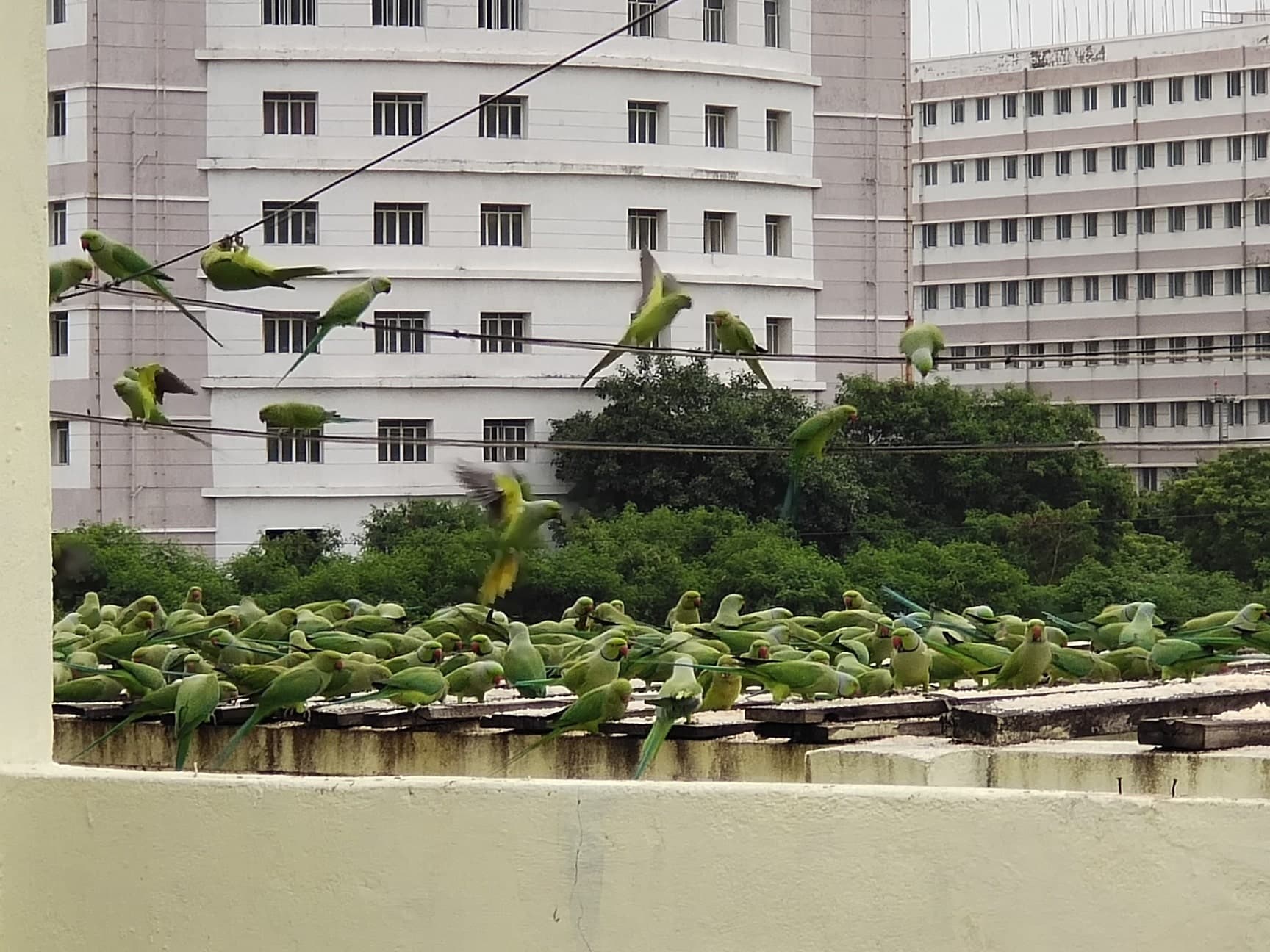
The Birdman of Chennai sanctuary is one of those rare wildlife photography opportunities that requires no telephoto safari, no early morning jungle trek, and no specialist guides. It is accessible, free, and it happens every single evening. And yet the photographic potential — 6,000 wild parakeets in golden-hour light, filling the sky above a Chennai rooftop — rivals any wildlife encounter in India.
Understanding the Light: Why Golden Hour Matters
Rose-ringed parakeets are brilliant green birds. In flat light, they are beautiful. In golden hour — the 20-30 minute window before sunset — they become transcendent. The warm orange light turns their green feathers gold, creates rim-lighting effects as they fly across the sun, and paints the entire sky amber-pink behind the swirling flocks.
At the Birdman of Chennai sanctuary, this golden window typically falls between 5:40 PM and 6:05 PM depending on the time of year. The birds arrive around 4:30 PM and reach peak numbers around 5:00–5:15 PM — so you will have over an hour of shooting before the light becomes truly magical.
Recommended Camera Settings
Because the birds move fast — especially in flight — you need settings that freeze motion while preserving enough exposure for the low light of evening:
Shutter speed: 1/800s minimum for birds in flight. 1/1000s is safer. During the golden hour window, you may need to push this to 1/640s to avoid underexposure — accept some motion blur on outstretched wings, which can actually look beautiful.
Aperture: f/4–f/6.3 for flying flocks (wider depth of field helps when birds move unpredictably). f/2.8 works for portrait-style shots of birds on the feeding platforms.
ISO: ISO 400–800 for most of the session. ISO 1600 during the final golden minutes. Modern cameras handle ISO 3200 well — don't be afraid to push it for the magic shots.
Autofocus: Continuous autofocus with subject tracking (AI Servo on Canon, Continuous AF on Sony/Nikon/Fuji). Bird-eye AF available on modern mirrorless bodies is exceptional here.
Drive mode: Continuous high-speed burst. You will take hundreds of frames to find the dozen great ones — this is normal.
Positioning on the Rooftop
The rooftop is modest in size, so positioning matters. Arrive by 4:00–4:15 PM to secure your spot before the first visitors crowd in.
For flock shots facing west: Position yourself with the setting sun behind you and to your left. The birds circle from all directions but the dense flocks often approach from the north — so a north-facing vantage with west-facing light is ideal.
For backlit silhouettes: Turn to face the sun (carefully — don't shoot directly into it). Birds silhouetted against a glowing sky are among the most dramatic wildlife shots you can get. A wide lens (24mm or wider) captures hundreds of birds at once.
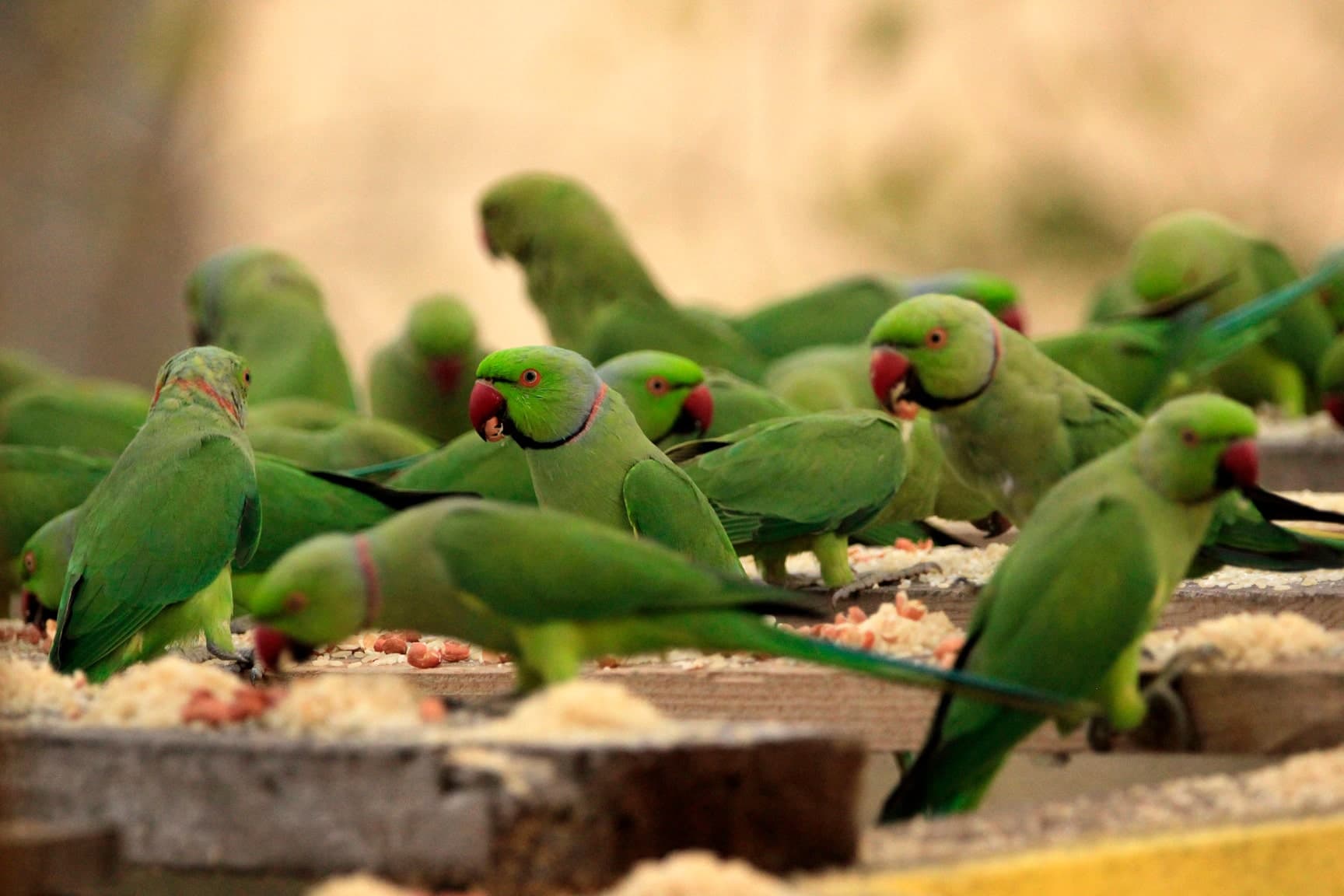
For close-ups: The feeding platforms attract birds within 1–2 metres of visitors. A 70–135mm equivalent lens is ideal here. The birds are remarkably calm — you don't need to be far away.
The Six Shots You Should Plan For
1. The Arrival Cloud: When the first large flock appears on the horizon, switch to your widest lens and shoot at 24mm or wider. You want the entire sky in frame. Shoot in portrait orientation to show height.
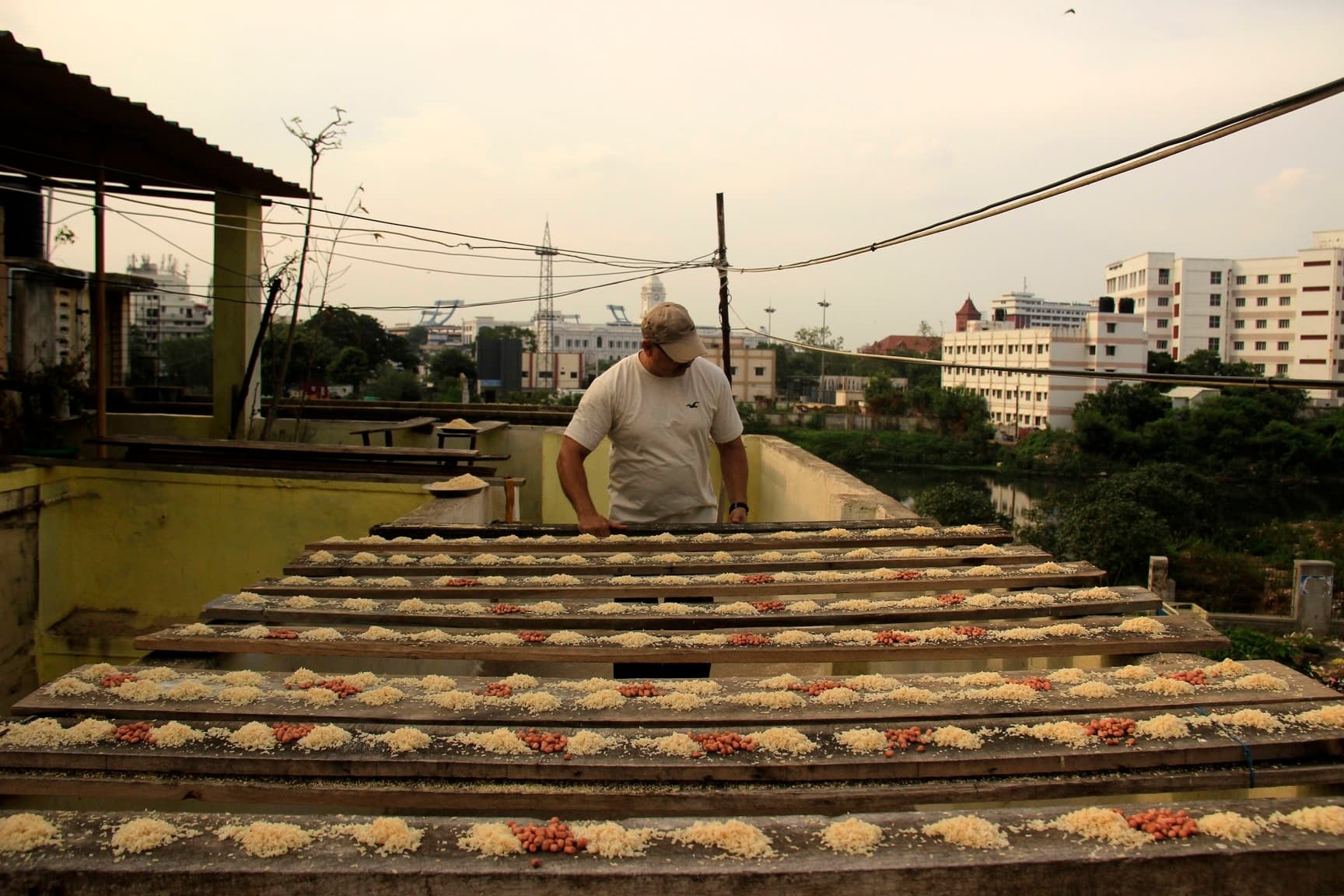
2. The Rooftop Portrait: As birds settle on the feeding platforms near Sudarson, get low and use a longer lens for intimate portraits showing feather detail.
3. Sudarson Among the Birds: The image of Sudarson with birds on his arms and shoulders is iconic. Ask his permission first — he is usually happy to pose. Wide aperture (f/2.8) blurs the chaotic background beautifully.
4. The Golden Silhouette: In the final 20 minutes, turn west and shoot birds silhouetted against the golden sky. Set exposure for the sky, let the birds go dark.
5. The Eye-Level Takeoff: Crouch low and point your camera toward groups of birds about to take flight from the platforms. The upward trajectory against the open sky produces dramatic frame-filling images.
6. The Video Panorama: You cannot fully capture this experience in a single photo. Record a 30-second video panning slowly across the rooftop. The sound is as spectacular as the visuals — 6,000 wings is a sound visitors never forget.
Equipment Recommendations
You don't need expensive equipment for great shots here. A modern smartphone in Pro mode can produce remarkable results. However, if you have access to camera gear:
- Best all-round: 70–200mm f/2.8 or f/4 zoom (covers flock shots and portraits) - For the wide-sky scene: 24–70mm or a wide prime (24mm, 35mm) - Mirrorless advantage: Subject-tracking autofocus on modern Sony, Canon R, Nikon Z, or Fuji bodies is a significant advantage for fast-moving birds - Tripod: Not needed — shoot handheld for flexibility with moving subjects - Extra batteries: The golden hour is 90 minutes in — charge fully before you come
Etiquette and Ethics
The sanctuary is a private home and a living wildlife environment. Please follow these guidelines:
- No flash photography — it disturbs the birds and can scatter the flock - No loud noises or sudden movements — patience is rewarded with better shots anyway - Respect the birds' space — don't reach toward them or try to hold them - Respect Sudarson — he is a host, not a subject. Ask before photographing him closely - Share responsibly — when posting to social media, tag the location respectfully and consider tagging @birdmanofchennai to help more people discover the sanctuary